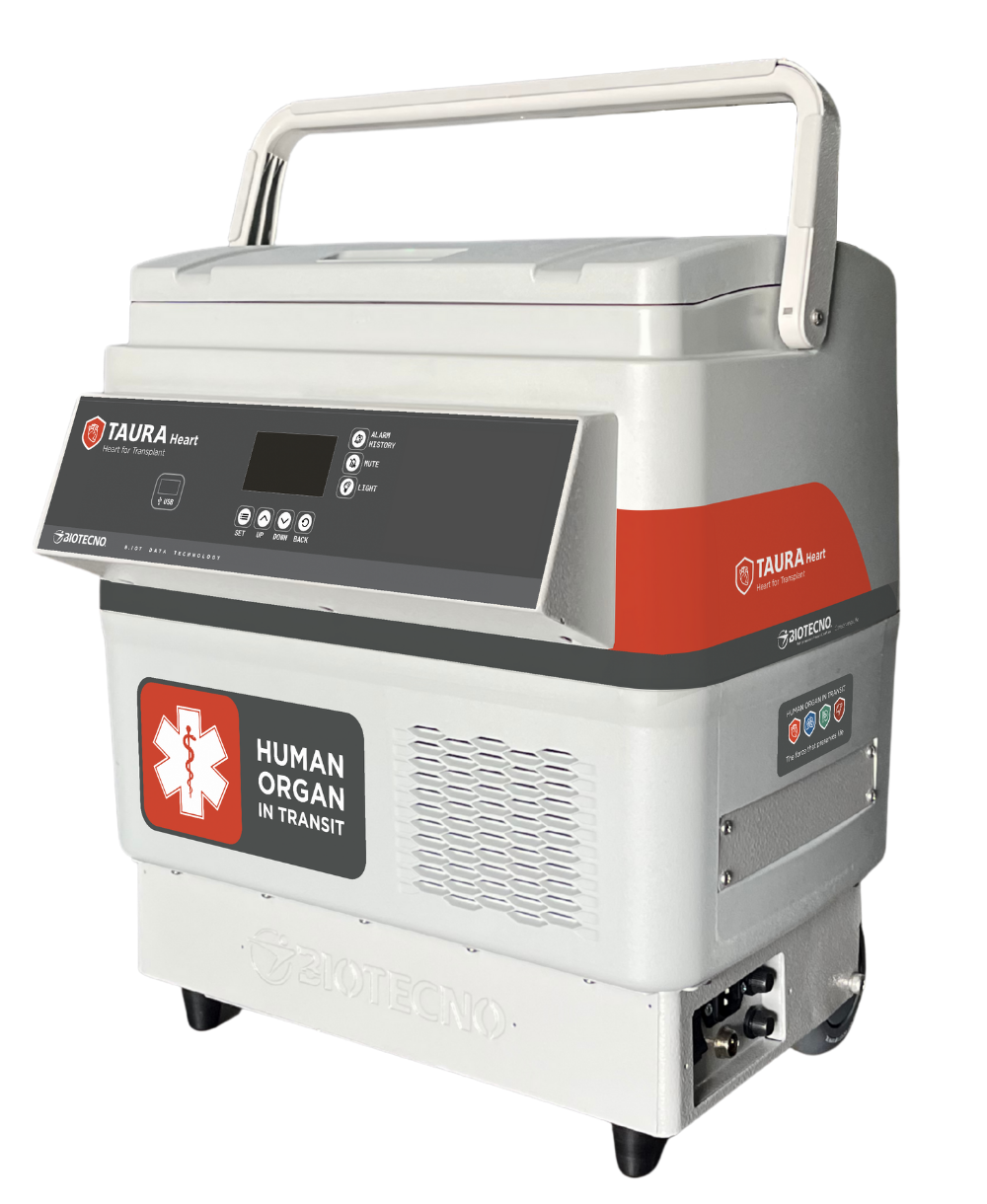
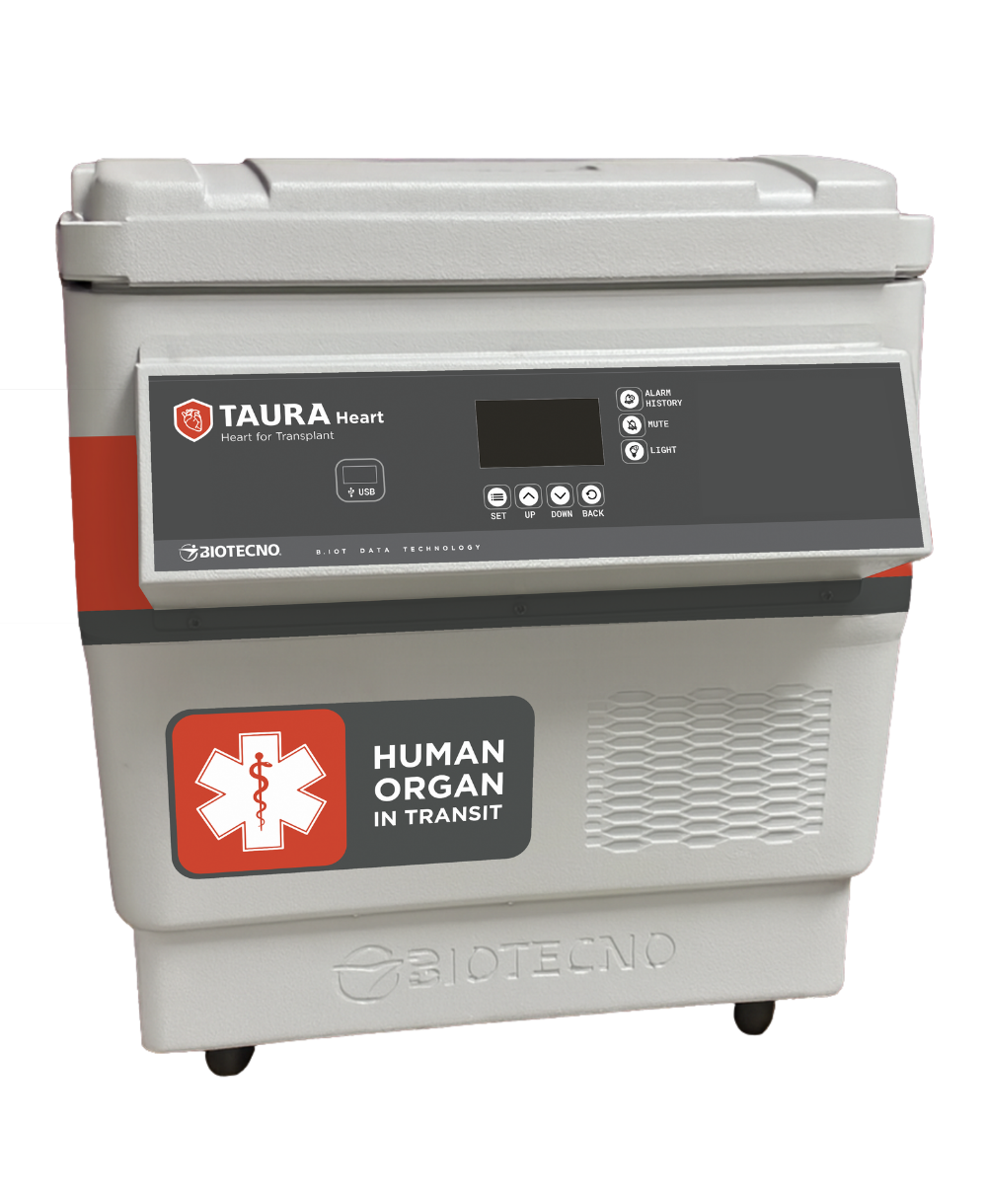
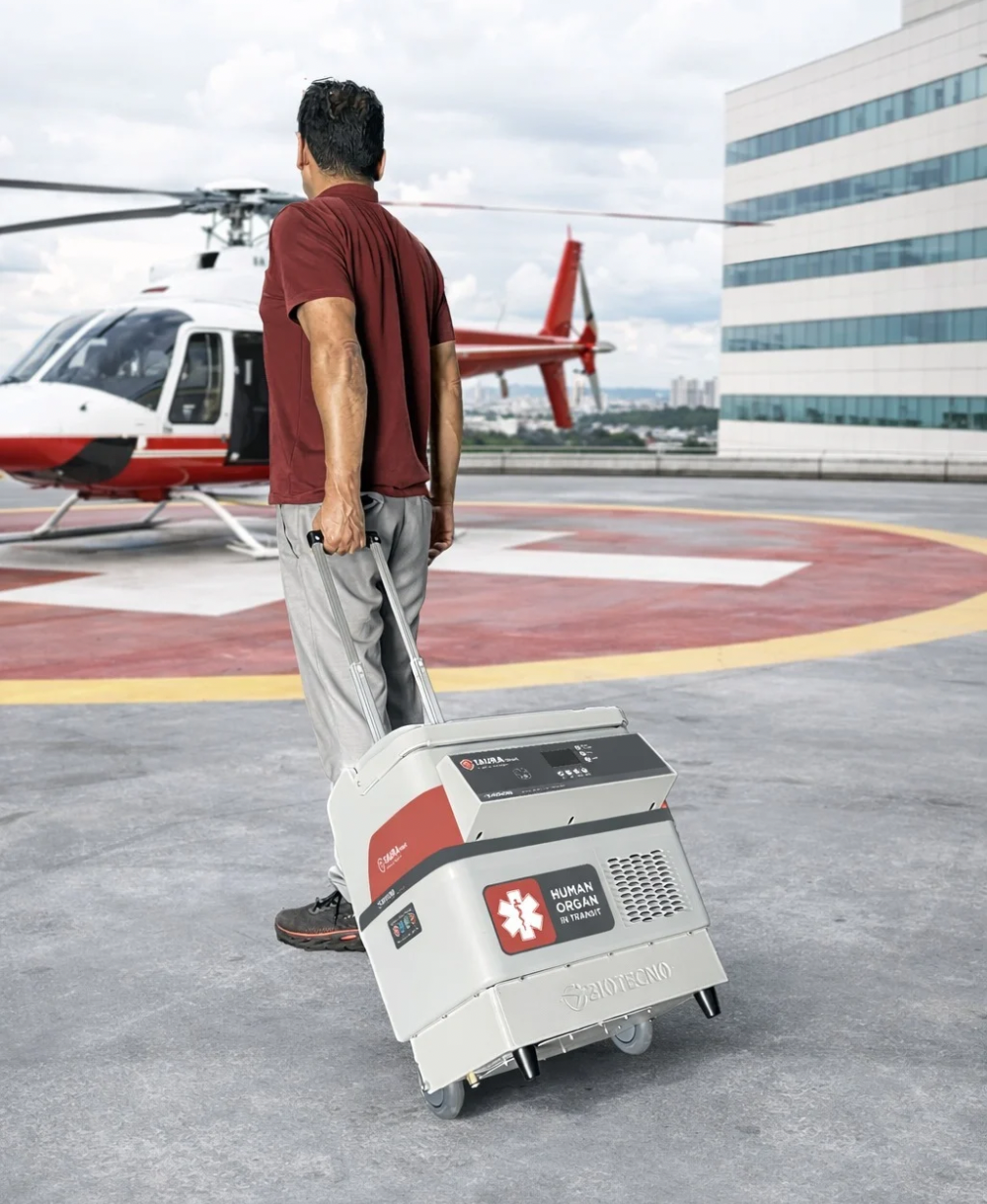
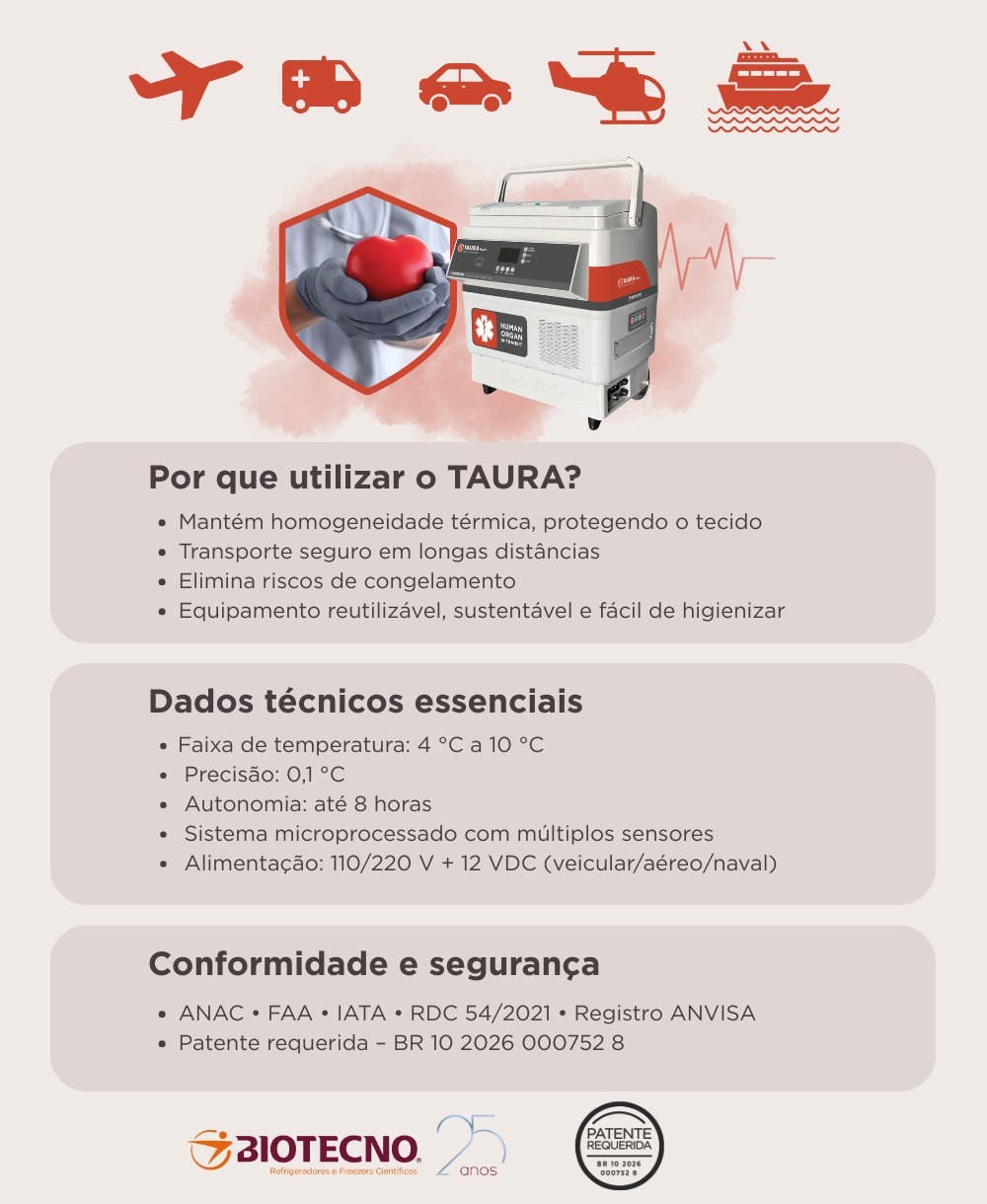
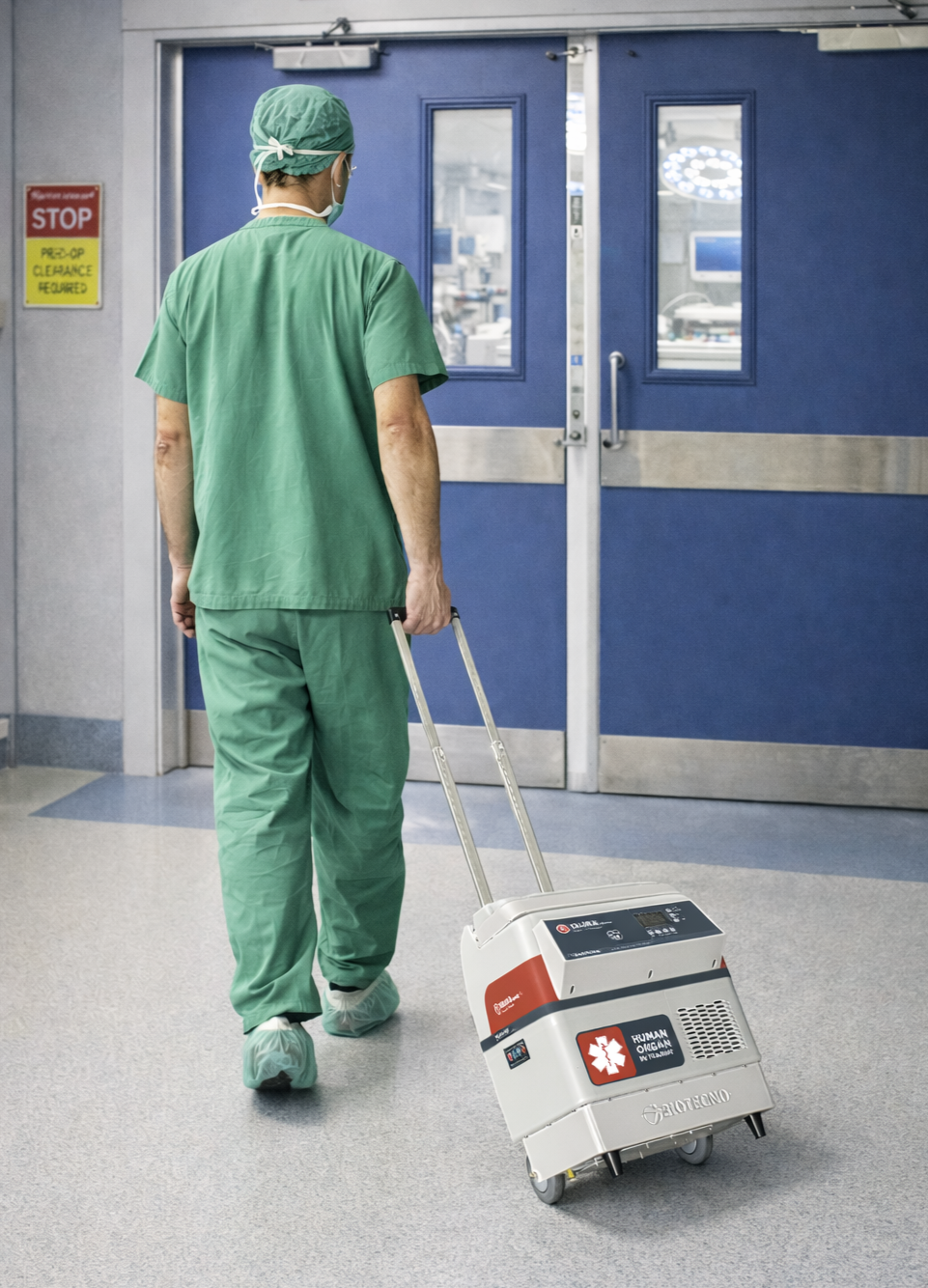
A portable and reusable device, developed for the transport and preservation of human tissue grafts intended for transplantation, under controlled temperature. The main objective is to guarantee ideal preservation conditions, preventing tissue freezing and extending the safe transport time, even over long distances.
|
8 liters |
|
Programmable between 4°C and 10°C |
|
Bivolt 100/240 VOLTS and 12 VDC (vehicle) |
|
Battery lasts up to 8 hours |
|
21 Kg |
|
57H x 45W x 38D cm (external) |
|
190H x 220W x 365D (internal) |
The equipment is designed to maintain the internal temperature within a programmable range between 4°C and 10°C, with an accuracy of 0.1°C, using an active refrigeration system based on a hermetic compressor and environmentally friendly R-134a gas. Thermal control is performed by a microprocessor-based electronic circuit with PWM modulation.
To ensure thermal homogeneity, the system incorporates forced internal ventilation, injected polyurethane insulation, and a silicone-sealed lid. Among its technical features are multiple NTC sensors, including one positioned next to the organ, allowing precise monitoring of the actual tissue temperature.
The device has programmable alarms for temperature deviations, power failure, and low battery, as well as control redundancy for safety. The emergency system is powered by a sealed rechargeable VRLA battery with an autonomy of up to 8 hours, which is approved by ANAC in Brazil and IATA internationally for use in aircraft, both with passengers and in the baggage compartment.
The control panel features a digital display, soft-touch keys, and an electronic temperature recorder with a datalogger capable of storing historical data. Communication with mobile devices is via Bluetooth Low Energy, allowing for remote monitoring, report generation, and data export.
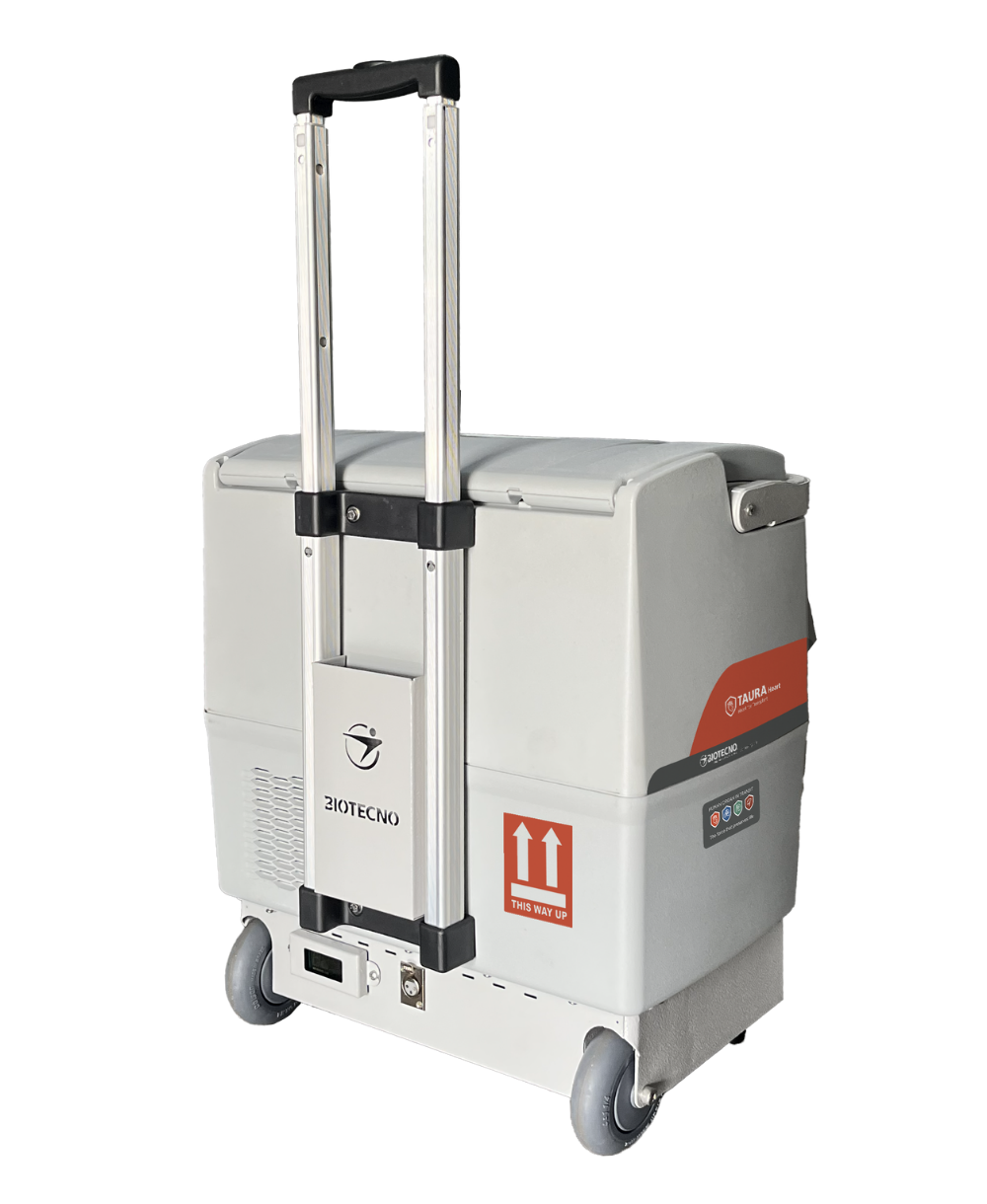
The equipment's structure is built from high-resistance thermoplastic material, with an internal stainless steel casing. It has casters and a suitcase-type handle for transport, and is available in models with an internal capacity of 15 liters gross and 8 liters (compartment for storing materials).
The system is designed to operate in different transport conditions, including air and road routes, ensuring thermal stability even during prolonged journeys.
The equipment offers advantages such as PWM control, redundant sensors, an integrated safety system, alarm history, remote management software, Bluetooth connectivity, and compliance with regulatory standards (ANVISA and FDA), offering a sustainable and low-cost alternative per use compared to traditional methods using ice and disposable devices currently on the market.
The equipment comes with a thermal qualification report for 4°C, 6°C, and 8°C, traceable via RBC/INMETRO Brazil.
OPERATION - BIVOLT: 100/240 VOLTS 50/60 Hz (automatic) and 12 VDC (vehicle).
CONSUMPTION KWH/MONTH: 8.7 KWh/month
CURRENT: Nominal 0.67A (110V) 0.37A (220V) Maximum 1.22A (110V) 1.15A (220V)
BACKUP BATTERY: 12 Volt/9Ah Sealed VRLA Battery
AUTONOMY: 8 hours. Depending on external temperature conditions and lid openings.
USB (REPORTS): Via Pendrive Datalogger Viewer https://sitrad.com.br/ferramentas/
TEMPERATURE ALARM RANGE: 4°C to 10°C or adjustable
POWER FAILURE ALARM: Yes. Audible and Visual.
SERIAL COMMUNICATION: RS-485 - USB Converter - Optional Modbus
INTERIOR DIMENSIONS (H x W x D): 190 x 220 x 365 mm
EXTERIOR DIMENSIONS (H x W x D): 570 x 450 x 380 mm
NET WEIGHT: 21 kg
CASTERS: Two 4-inch casters at the rear with two front supports.
PRODUCT WITH PATENT: BR 10 2026 000752-8.
Brazilian technology.